
Water Filtration
There’s no ‘one size fits all’ approach to water filtration. Before choosing a water filter, it’s important to understand what’s in your water first so you know the best filter media for your specific contaminants. This section has a link to my recommended testing service, TapScore, along with links to a few filter options. For those on City water (not well), both multi-stage and reverse osmosis will filter out many of the most concerning contaminants.
Note about PFAS: I have 7 PFAS chemicals in my water and have tested filters from both Pure Effects and AquaTru and they both brought PFAS levels down to ND (non-detect).
*affiliate disclosure* Many of the links included on these pages are affiliate links, meaning, at no additional cost to you, I will earn a small commission if you click through and make a purchase. I only share affiliate links to products that I’ve personally vetted and personally believe in, so you can shop with confidence!
Water Filters FAQs
I’ve heard that more and more utilities are finding the chemicals known as per- and polyfluorinated alkyl substances, or PFAS, in their water systems?
Unfortunately, PFAS chemicals have been showing up in more community water systems and private wells each year. In April of 2024, the EPA finally came out with official guidelines for 6 of these chemicals given a review of the health impacts and for two of the most common – PFOA and PFOS – the EPA said there is virtually no safe level in drinking water when consumed daily over time.
What are the health risks of daily exposure to PFAS chemicals?
PFAS chemicals are also referred to as “forever chemicals” because they don’t readily break down and can build up in our bodies. In people, repeated exposure to certain PFAS may lead to:
- Increased cholesterol levels.
- Decreased birth weights.
- Decreased immune response to vaccines.
- Changes in liver enzymes that indicate liver damage.
- Increased risk of blood pressure problems during pregnancy.
- Increased risk of thyroid disease.
- Increased risk of certain cancers.
Source: https://doh.wa.gov/community-and-environment/contaminants/pfas
I’m on City water. How do I know if my utility has found PFAS chemicals in the water?
If your utility has found PFAS chemicals, they will typically disclose this in their annual water report but I also recommend reaching out to utilities to see if they’ve tested, when they last tested, and what the results were.
While not perfect, the EWG also puts together an interactive map that tracks where PFAS chemicals have been found.
You can find this map here: https://www.ewg.org/interactive-maps/pfas_contamination/
What about fluoride in drinking water? Is it safe?
There have been some big developments recently with regards to fluoridated drinking water that have found that fluoridation of water at 0.7 milligrams per liter (“mg/L”) – the level presently considered “optimal” in the US – poses an unreasonable risk of reduced IQ in children when factoring in all the different ways children are exposed to fluoride.
As far as the benefits of ingested fluoride go, a recent study by the Cochrane Collaboration concluded that contemporary evidence does not show a reduction in cavities of more than 4%, and there may no longer be any benefit at all with the widespread availability and use of fluoride toothpaste.
For these reasons and the fact that fluoride has been designated as a neurotoxin and endocrine disrupting chemical, I recommend filtering it out of drinking water to reduce daily exposures.
How do I test my water?
Most State Departments of Health maintain a list of accredited labs for testing your water or home tests like TapScore work well too. If testing is not within your budget, you can also review your water utility’s annual water quality report, and follow-up with your utility to request levels of other things that they test for but are not required to report out on.
The EWG has also put together a helpful water quality database based on your zip code (aggregating the same information that’s publicly available from water utilities) but it’s important to know that neither of these things will tell you exactly what is coming out of your specific taps due to things like lead that will be specific to your home’s pipes and fittings. Lead would only be detected through testing. Here’s a link to the EWG’s tap water database: https://www.ewg.org/tapwater/
Are there other things in our water that are concerning outside of PFAS and Fluoride?
In 2025, the Environmental Working Group released an analysis of data from nearly 50,000 public water utilities taken from 2021-2023. They found that water suppliers across the US recorded 324 different contaminants in our nation’s water. Since there are only ~89 contaminants regulated by the EPA, the remaining pollutants in our water are technically there “legally”. So there are likely contaminants in our water that your utility is not regularly testing for or reporting out on. Another big unknown is what happens between the water source and our taps. An estimated 6-10 million homes still contain lead piping and homes older than 1986 may also have lead in the pipe fittings as I found with my home when I tested my tap water.
For PFAS, Lead, and Arsenic, there are no levels deemed safe for long term exposure through drinking water. Both PFAS and Arsenic are carcinogens and all three are considered Endocrine Disrupting Chemicals (EDCs) that can have health impacts even at low levels. For this reason, I put together a FREE guide on reducing exposures to EDCs, and you can find it here: https://lowertoxliving.com/endocrine/.
How do I choose the best water filter?
First you need to understand what is present in your water. The best way to do this is to test your tap water. If testing is not within your budget, you can also review your water utility’s annual water quality report, and check the EWG’s tap water database. You’d then want to purchase the filter that will best address the main contaminants present in your tap water.
And…I can help!
This can be time consuming and confusing for many so I’ve put together a low-cost way to help give you peace of mind that your water is safer for you and your family to drink. See my Water Filter Analysis Package here.
Testing your Water
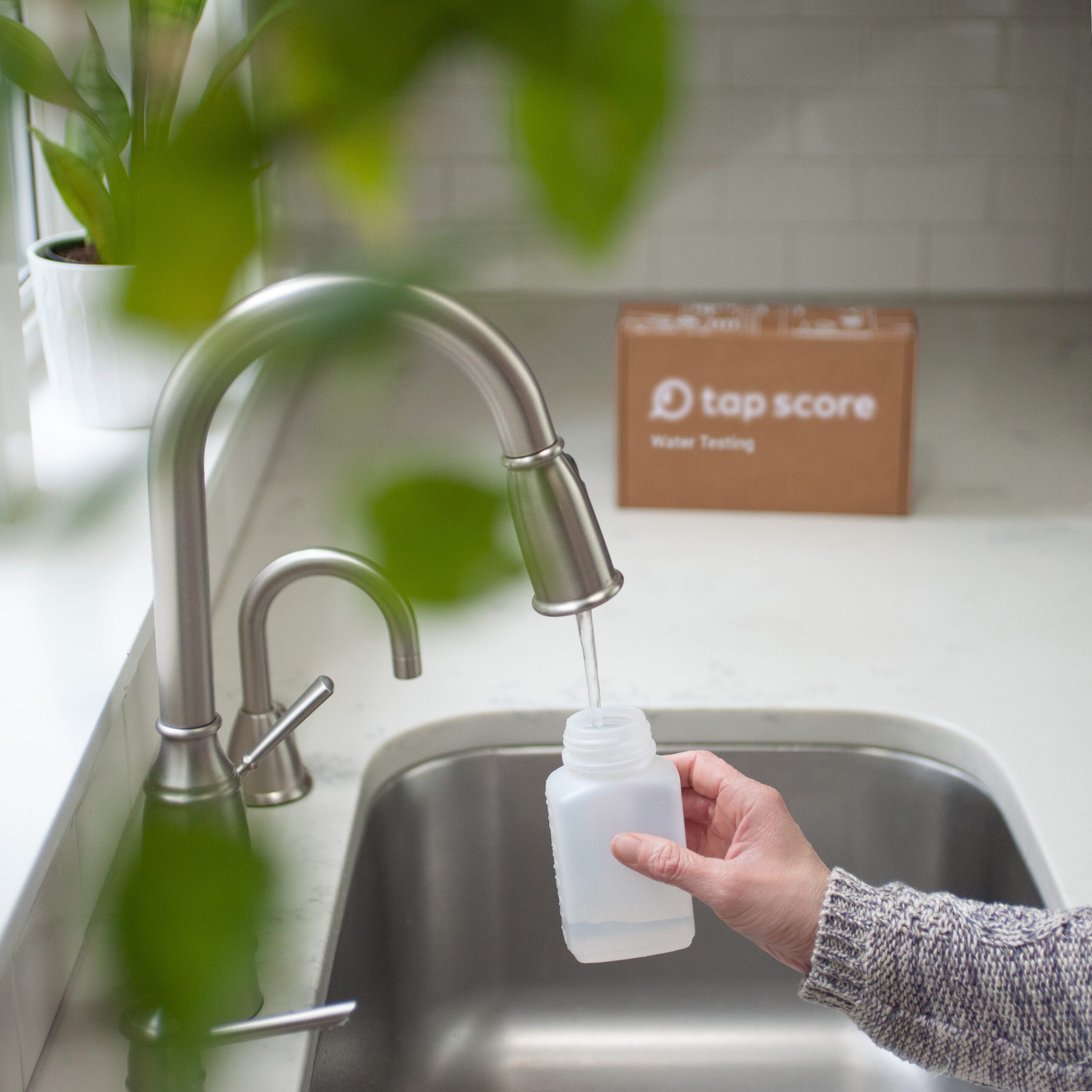
Before buying a specific filter, it’s important to know what’s in your water.
My recommended water testing service is Tap Score
Use Code LTL10 and the below link to get $10 OFF
Undersink:

AquaTru Alkaline Reverse Osmosis:
What I like about it:
- Solves for the stripping of minerals with the Alkaline filter
- 4 stages of purification
- Filter changes couldn’t be easier – just twist them in and out
- Easy annual tank cleaning process


Pure Effects Multi-stage filter
What I like about it:
- Boutique company popular with environmental health advocates.
- Will consult with you on the best filter type for specific contaminants present in water
- Has a Gallon meter available for purchase to take the guess work out of when to change filters
- Has a leak detector that shuts off water supply to unit in the event of an undersink leak
- Filter changes take about 20 minutes

Countertop:
AquaTru Alkaline Reverse Osmosis Classic or Carafe :
What I like about it:
- Solves for the stripping of minerals with the Alkaline filter
- 4 stages of purification
- Filter changes couldn’t be easier – just twist them in and out
- Has glass carafe option
- No heated water feature which re-adds chemicals and micro-plastics into filtered water
- No plumbing required – great for rentals, car travel, or dorm rooms


Shower:
Pure Shower Filter system by Pure Effects
What I like about it:
- Easy to install and change out filters
- Includes KDF filtration, which is one of the most effective for chlorine and disinfection byproducts

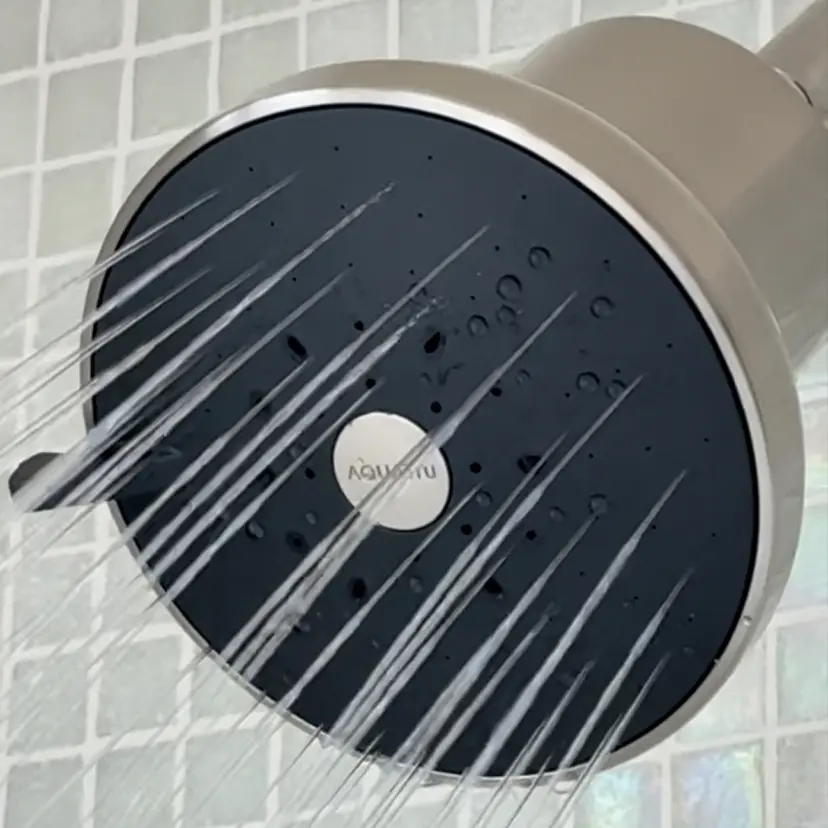
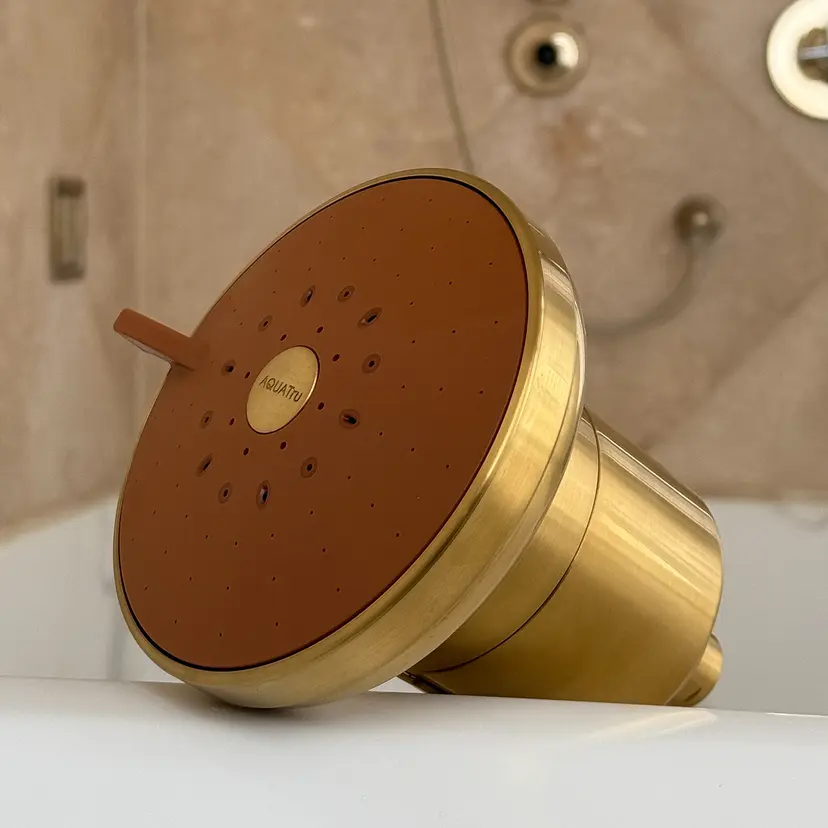
AquaTru Shower Head
What I like about it:
- All-in-one shower head
- Easy to install and change out filters
Whole House Filters:
Note about whole house filtration: While a whole house filter adds extra peace of mind for all faucets in your home, even with a whole house system, a Point Of Use (POU) system is also recommended for drinking and cooking water.
There are some contaminants that standard whole house filter systems are not very effective at removing and Whole house systems will not address contaminants introduced after filtration by your own pipes or fixtures (like lead or copper).
If you’d like a whole house filter, I’d be happy to help you pick-out the best option for your water quality and needs.